


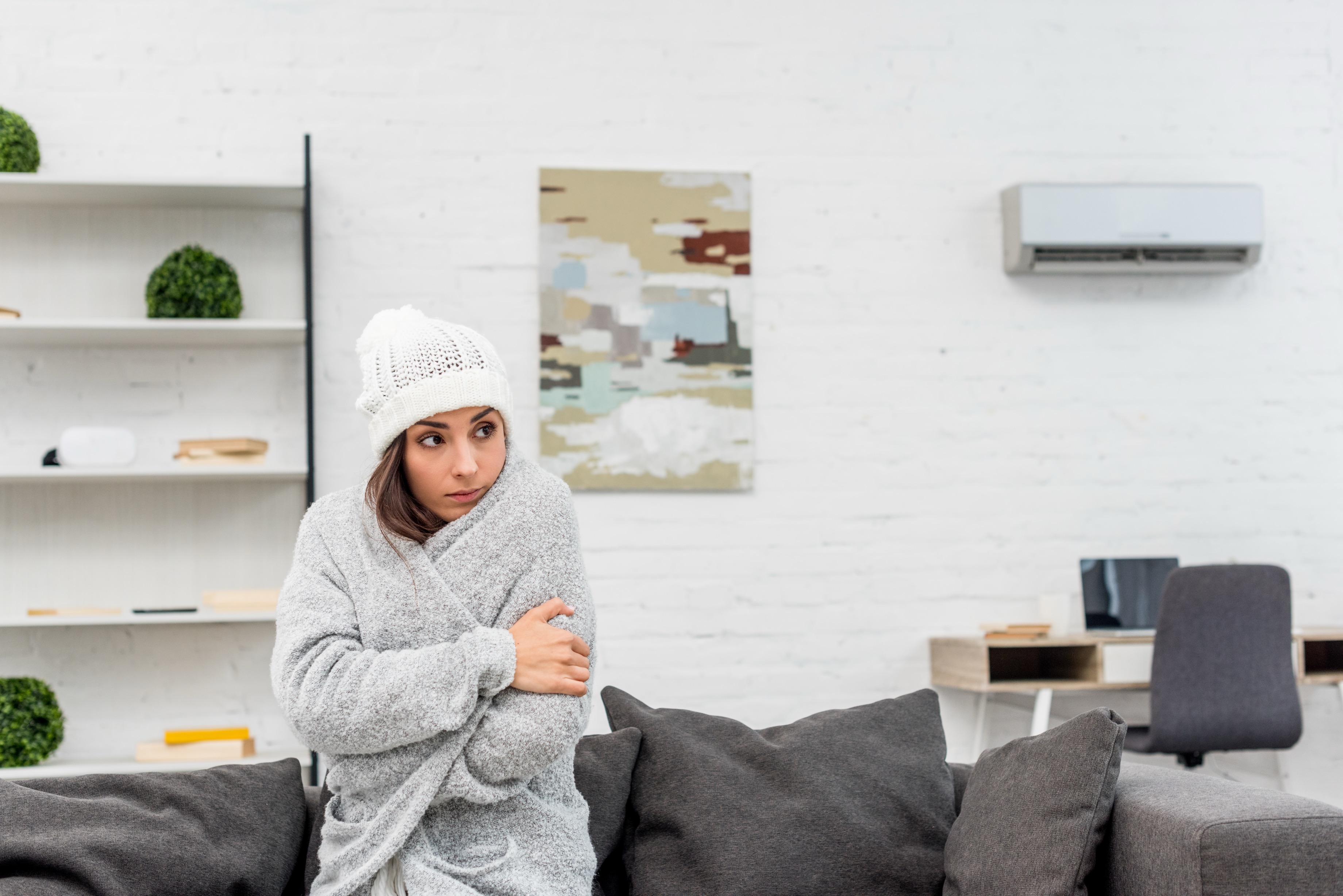


Heater Blowing Cold Air? What to Check Before You Call
November 11, 2026

Why is my heater blowing cold air?
A heater blowing cold air usually comes down to four things: the thermostat fan is set wrong, airflow has been cut back, the furnace isn't lighting, or a heat pump is in defrost or another heating mode that feels cooler than expected. If the air is only cool for the first minute or two, that can be normal while the system starts up.
At Above + Beyond Service Company, we check the thermostat, the filter, the ignition path, and the heat pump's operating mode before we guess. The first two checks take a few minutes and no tools. The last two usually need a technician, because the blower can run even when the burners don't fire or the heat pump is doing something you didn't expect.
For a deeper look at heat pump behavior, our guide on heat pump acting up covers the oddball cases.
Check the thermostat settings first
The thermostat can make a working heater feel broken, and the quickest fix is usually in the settings. If the fan is set to "On," the blower keeps moving air between heating calls, so unheated air comes through the vents. Set it to "Auto" and give the system a minute to respond.
Make sure the mode says Heat, not Cool or Off. Then raise the setpoint at least 5 degrees above the room temperature so the thermostat actually asks for heat. A low setpoint can leave the furnace idle even when the equipment is fine.
Batteries matter too. A dim or blank display can mean the thermostat isn't sending a solid call, and a weak battery can make the screen lie before it quits completely. Programmed schedules and hold settings can also keep the house cooler than you expect, especially after a setback.
If the thermostat still won't call for heat after those checks, the issue may be in the control side rather than the heater itself. Our guide on why a thermostat is not working covers the settings and wiring that can get in the way.
A dirty filter can make the furnace shut the burners off
A clogged filter can make a furnace overheat fast enough to shut the burners off. The blower may keep running after that, which pushes cool air through the vents until the cabinet cools down and the limit switch lets the burners try again.
Here’s the chain in plain English. The filter loads up with dust and pet hair, airflow drops, and the heat exchanger can't shed heat the way it should. That rising temperature trips the limit switch, a safety control that protects the furnace from damage, so the flame goes out while the fan keeps moving air.
Blocked supply registers can feed the same problem. If too many vents are closed or covered, the furnace still makes heat, but the air can’t move through the house well enough to carry it away. That leaves the heat exchanger too hot, and the same safety shutdown follows.
A clean filter and open registers are the two parts of this check that matter most. We’ve found that people often replace the filter and forget the vents, but the airflow has to work end to end. If the filter is dirty again soon after a change, the return side may be pulling in more dust than you expect.
- Replace a filter that looks gray, packed, or hard to see through.
- Make sure supply registers aren’t blocked by furniture, rugs, or closed dampers.
- If the burners keep shutting off after airflow is restored, the limit switch or another safety control may need testing.
When the furnace is trying to protect itself, the symptom feels the same at the vent, cold air keeps coming out.
When the blower runs but the furnace never lights
A furnace that never lights has moved past the quick comfort checks and into ignition or safety-control trouble. The blower can still move air, but the burners never make heat, so the air at the vents stays cool.
A failed igniter is one common cause. It has to get hot enough to light the gas, and when it cracks or weakens, the gas never catches, so the blower keeps pushing unheated air.
A dirty flame sensor can cause the same symptom. The sensor has to prove there’s a flame to the control board, and if residue keeps it from reading that flame, the board shuts the gas off a few seconds after it opens, so you get a furnace blows cold air then hot pattern or no heat at all.
Other ignition-side faults are simpler on paper and still need testing. A closed gas valve or interrupted gas supply leaves no fuel for the burners, a standing pilot that’s gone out keeps older furnaces from lighting, and a lockout after repeated failed starts pauses the whole ignition sequence.
- A blocked condensate drain can back water up in a high-efficiency furnace and stop the burners from starting.
- A tripped pressure switch can keep the furnace from proving airflow through the venting, so the control board won't open the gas.
- A failed igniter, dirty flame sensor, or lockout usually needs a technician with ignition and safety-control tests.
At this point, the problem usually stops being a homeowner check and becomes a test of ignition, flame proving, and the safety controls that protect the furnace. We can see which part is failing, but not from the vent alone.
When a heat pump is the one blowing cold air
Sometimes a heat pump blowing cold air is normal for a short stretch, but it can also point to a real fault. Defrost mode is the most common normal case. The outdoor coil collects frost in cold, damp weather, the reversing valve shifts the system into defrost, and the coil melts that ice so the indoor air can feel cooler for a bit. Steam at the outdoor unit can happen during that melt-off.
| Heat pump behavior | What it usually means |
|---|---|
| Short burst of cooler indoor air with steam outside | Defrost mode is clearing frost from the outdoor coil |
| Cool air that keeps coming when heat is requested | Something in the heating circuit needs testing |
| Outdoor unit stuck in ice | Defrost isn't clearing the problem |
A reversing valve problem can send the refrigerant through the wrong path, which keeps the indoor coil from picking up heat, so the vents stay cool when you want heat. Low refrigerant does the same kind of damage in a different way, because the refrigerant can't carry enough heat indoors, and the supply air feels cold. A failing compressor can't keep the refrigerant moving at the right pressure, so the whole heating cycle falls short.
Thermostat trouble can look the same from the couch. If the thermostat is set wrong or wired wrong for a heat pump, it can call for the wrong mode and leave you with cool air instead of heat. If the air stays cold after the system has had time to settle, the issue usually needs direct testing of the valve, refrigerant circuit, and compressor.
Cold air from some vents but not others
Cold air in only part of the house usually points to duct distribution, not a furnace that quit making heat. A leaky or disconnected duct can lose heated air in an attic or crawl space, so one room gets little warm air even while the furnace keeps running.
Closed dampers or registers can create the same complaint. A supply register that’s shut, blocked by furniture, or partly covered cuts airflow to that room, and an unbalanced duct layout can leave the farthest rooms feeling cold even when the rest of the house is fine.
- A disconnected duct can dump warm air into a hidden space instead of the room.
- A leaky run can bleed off heat before the air reaches the vent.
- A closed damper can choke off one branch of the duct system.
- A blocked register can make a room feel like the heater is sending cold air.
- An unbalanced system can favor rooms closer to the furnace.
That pattern matters because the furnace may be doing its job. The problem is the path the air takes after it leaves the blower, and that’s a different fix than burner trouble or thermostat trouble.
What not to do when the heater is blowing cold air
If the furnace cabinet is open, don’t. Inside are live electrical parts, gas components, and moving parts, and poking around can turn a simple no-heat complaint into a shock or leak problem. Leave the cover on and keep your hands out.
Don't bypass a safety switch or keep resetting a furnace that's locking out. The limit switch, pressure switch, and control board are there to shut the burners down when something's wrong, and repeated resets can hide the fault instead of clearing it.
If you smell gas or burning, shut the system off and treat it as a safety issue, not a comfort problem. Get everyone out if the gas smell is strong, and don't try to light the furnace, flip more switches, or keep running it. That's the point where the smell matters more than the cold air.
- Don't open the furnace cabinet.
- If a safety switch is present, do not bypass it.
- Don't keep resetting a furnace that's locking out.
- If you smell gas or burning, shut the system off.
- Don't treat odor as a small nuisance.
A furnace that keeps tripping on safety controls needs direct testing of the ignition, flame proving, and airflow path, and a licensed technician can sort out which part is actually failing.
When to call a technician for heater blowing cold air
When the thermostat is set to Heat, the fan is on Auto, the filter is clean, and the air is still cold after a few minutes, it’s time for a service call. At that point, the problem has moved past a quick homeowner check and into direct diagnosis of the ignition system, airflow controls, or heat pump operation.
Repeated cycling is another clear sign. A furnace that starts, stops, and starts again without warming the house is usually tripping a safety control, and that takes testing at the limit switch, flame sensor, or pressure switch to sort out.
Clicking without ignition means the furnace is asking for heat but never getting a flame. An iced-over outdoor unit on a heat pump points to a defrost or refrigerant problem, and a technician needs to check the reversing valve, refrigerant charge, and compressor performance.
Gas or burning smells change the decision immediately. If you notice either one, the issue is no longer just comfort, and the system needs hands-on testing before it runs again.
Frequently Asked Questions
Why is my heater blowing cold air for a minute or two?
A short burst of cool air can happen while the furnace warms the heat exchanger and the blower catches up. The air should turn warm quickly after that. If the cool air keeps going, the issue usually isn't startup anymore, and the system needs a closer look.
Can a heat pump blow cool air and still be working normally?
A heat pump can feel cooler than a gas furnace and still be operating the way it was designed. In defrost, the outdoor coil sheds frost and the indoor air can feel less warm for a short stretch. A long cold run, or outdoor ice that doesn't clear, points to trouble.
How do I know if my furnace problem is a safety issue?
Gas or burning odors make this a safety problem right away. Shut the system off and don't keep trying to run it. A repeated lockout, clicking without flame, or a blower that keeps cycling without heat also means the furnace needs direct testing.
What will a technician check when the air stays cold?
A licensed technician will test the thermostat, airflow, ignition parts, and heat pump operation to find the real cause. That can separate a setting issue from a dirty filter, a failed igniter, or a heat pump fault. All technicians are licensed through the Oklahoma Construction Industries Board (CIB).
Get the heat working again
If the quick checks didn't fix it, let a technician take the next step. When the air stays cold after you've ruled out the thermostat and filter, the problem is usually deeper than a setting.
All technicians are licensed through the Oklahoma Construction Industries Board (CIB), so the diagnosis starts with the right credentials.
If you have worked through the checks above and the heater is still blowing cold, a licensed technician can find the cause quickly and tell you what the fix looks like. Above + Beyond Service Company repairs furnaces and heat pumps across Oklahoma City and the surrounding Central Oklahoma communities. Call (405) 428-3382 or book online at pinkvantechs.com, and we will help you get the house warm again.
Written by the Above + Beyond Service Company team. All technicians licensed through the Oklahoma Construction Industries Board (CIB) Above + Beyond Service Company is licensed for HVAC, plumbing, and electrical work in Oklahoma under license numbers #00176537, #00136197, and #160383 · NATE-certified technicians.
Related Posts
Kitchen Sink Backed Up? What to Do Before Guests Arrive
Kitchen sink clogged in Oklahoma City? Learn how to clear grease, food scraps, and trap blockages before guests arrive, and when to call a plumber.

Toilet Won't Flush? Here's What to Do Before Calling a Plumber
Toilet won't flush in Oklahoma City? Check the tank, plunger, and drain clues first, then know when to call a plumber for help.

Garbage Disposal Not Working? What to Check First
Garbage disposal not working in Oklahoma City? Check jams, power, leaks, and drain clogs first, then know when to call for repair.
You’ve Probably Heard About Our REPUTATION
We have maintained quite a reputation for our emergency repair service, affordable prices, open lines of communication and comprehensive services that are sure to go Above + Beyond your expectations.

Affordable Prices
We believe that everyone deserves access to high-quality solutions, which is why we offer specials that make our services more affordable than ever.

Open Lines of Communication
You can call us anytime to schedule an appointment or simply drop us a message on our website. We are always happy to hear from you!

Emergency Service
We offer same-day and weekend appointments to help provide prompt, efficient solutions for your service needs.

Comprehensive services
When you work with us, you can trust that you are receiving top-quality services from experienced professionals who take pride in their work.
EPA Certified Technicians
Above + Beyond only uses NATE and EPA-certified technicians. Subcontractors are never used.
Punctual to Your Appointment
Your time matters. That's why every Above + Beyond appointment comes with a confirmed arrival window, a courtesy call when your technician is on the way, and a live tracking link so you're never left guessing.
Not Your Average Techs
We're not like normal techs. We're cool techs! We're here to be good neighbors, not the best salesmen. If we give you our opinion, it's the same advice we'd give our own parents or family.

"We Are Very Happy With Above + Beyond!"
-Lucian D.
- Terri O'Bryant
- Todd Schug
- Winford willie


We Simplified Home Improvement Financing
- Several different loan types available.
- Financing available for most levels of credit.
- Options for deferred interest, deferred payments.


Serving Our Neighbors in Oklahoma City Since 2015
Ignoring plumbing, HVAC, or electrical issues in your home or business can lead to costly damage and safety hazards. That’s why our local experts are dedicated to keeping your property running smoothly with reliable residential and commercial services in Edmond,
Yukon, and the surrounding areas.
When you choose our certified contractors, you can expect us to deliver long-lasting results while prioritizing your safety from start to finish! From selecting a new appliance to repairing an existing system, we offer a variety of colors and styles from industry-leading brands to accommodate your unique needs and budget.
Our Service Areas
Installing a new AC unit? Frustrated with faulty outlets? Our contractors are available 24/7 for
all your plumbing, electrical, and HVAC needs in Oklahoma City!


Take Advantage of
Our Offers + Save Today


