


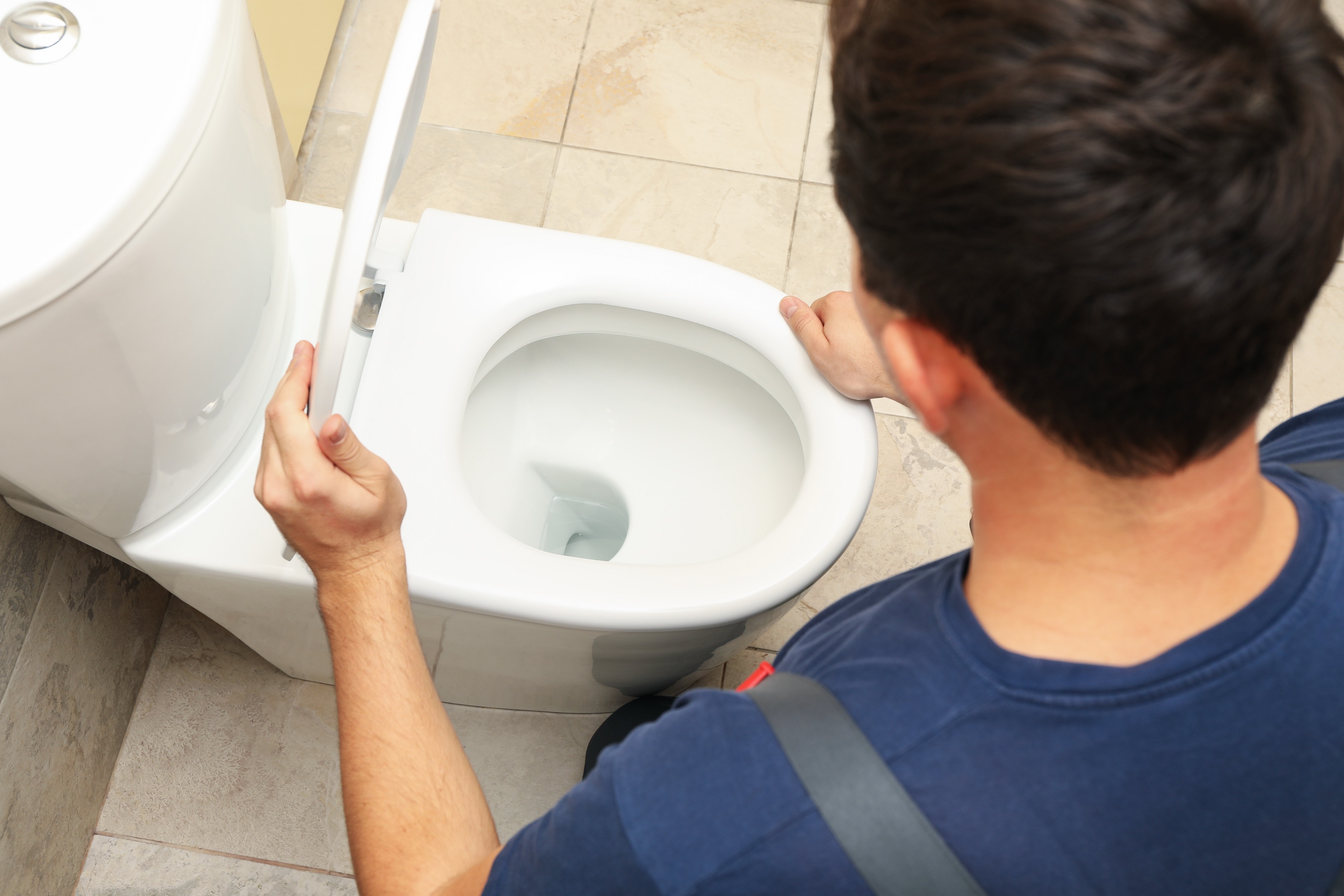


Toilet Won't Flush? Here's What to Do Before Calling a Plumber
November 10, 2026

Why won’t my toilet flush, and what should I check first?
A toilet won’t flush for four common reasons, a clog, low tank water, a flapper or chain that isn’t lifting right, or a closed supply valve. A quick look in the tank usually tells you if the trouble is there or down in the bowl and drain.
At Above + Beyond Service Company, we start by checking the tank before we touch the drain. That matters because Oklahoma City’s hard water runs around 154 PPM, and mineral buildup can throw off rubber parts and water levels.
If the bowl water rises, gurgles, or other drains act up too, stop flushing. That points past the toilet itself and into the line that serves the house.
What a toilet flush is supposed to do
Because a flush works in a set order, one bad step changes the symptom. You press the handle, the handle lifts the chain, the chain raises the flapper, and tank water rushes into the bowl. If that sequence happens cleanly, the bowl gets a fast surge and the trapway starts the siphon that carries waste away.
Watch one flush with the tank lid off, and you'll see where it breaks. If the handle moves but the chain barely lifts, the tank side is failing to open fully. If the tank empties but the bowl only swirls weakly, the water made it out of the tank, but the bowl and drain didn't create a strong pull.
A normal flush also depends on enough stored water and a clear path through the bowl. In homes with hard water around 154 PPM, mineral scale can coat rubber and plastic parts in the tank and narrow the small openings that feed the bowl. On hot days above 100 degrees, a toilet that's already weak can show the problem faster because every missed gallon of tank water matters more.
That quick look tells you a lot in seconds:
- Handle rises, chain follows, flapper lifts.
- Tank water drops fast into the bowl.
- Bowl water should surge, then settle as the siphon starts.
- A weak flush means one part of that chain didn't happen fully.
A toilet that needs repeated plunging is also telling you something's still restricted. If the bowl's motion is the part that looks wrong, the issue is in the bowl or drain. If the tank barely moves water, the problem starts before it reaches the bowl.
What to check inside the tank before you reach for the plunger
A loose or slipped chain can stop the flapper from lifting at all. If the chain has fallen off the handle arm, the handle moves but nothing opens. If it’s hung up with too much slack, the flapper rises late and the flush can feel weak. If it’s pulled too tight, the flapper can’t settle back and seal cleanly.
The flapper itself can also be the problem. A stiff, warped, or mineral-coated flapper won’t swing up and drop back the way it should, so the tank either dumps water too slowly or doesn’t seal afterward. In Oklahoma City water, which runs around 154 PPM dissolved minerals, that chalky buildup shows up on rubber parts faster than most people expect. A flapper that feels hard or crusty is past its best days.
Water level matters too. The tank needs enough stored water to drive a strong flush, and the fill line inside the tank gives you the target. If the water sits well below that mark, the bowl gets less push and the toilet won't flush all the way. A partly closed supply valve behind the toilet can leave the tank short every time, and a weak refill usually points to that before anything more complicated.
Check those parts in this order:
- Chain, for slack, a slip, or a break.
- Flapper, for stiffness, warping, or scale.
- Water level, for a tank that’s filling below the mark.
- Supply valve, for a handle that isn’t fully open.
A toilet handle loose can be part of the same story, because a handle that doesn’t lift the chain with enough travel leaves the flapper sitting still. If you fix the chain or open the valve and the next flush is normal, you’re done. If the tank looks right and the bowl still acts up, the problem has moved past the tank.
How to plunge a toilet that still will not flush
The flange plunger provides the best seal in a toilet bowl because its soft rubber sleeve extends into the drain opening and helps block splashback. A flat sink plunger can work in a pinch, but it doesn't grab the toilet opening as well, so you usually lose force where you need it most. If you're trying to figure out how to fix toilet that wont flush, this is the tool that gives you the cleanest shot.
- Pick a flange plunger. The flange is the folded rubber lip at the bottom, and it fits the toilet's shape better than the flat cup style.
- Set the bowl water at a workable level. You need enough water to cover the plunger cup so it can push and pull the blockage, but not so much that the bowl is already near the rim. If the bowl is too full, scoop some out first. If it's too low, add enough water to cover the cup.
- Center the plunger over the drain and press slowly at first. That first push should be gentle, or you'll splash dirty water back at you. Then work the handle with firm, steady strokes while keeping the seal tight.
- Pull up on the last stroke. That backward pull often breaks the clog loose better than the push does.
- Stop and test once the water drops. A sudden drain means the blockage may be moving, but don't keep hammering away if the bowl stays high. That just adds more water to a bowl that can't clear.
Chemical drain cleaners don't belong in a toilet. They can sit in the bowl, damage the porcelain finish and the internal parts, and make later repair harder for us if the clog doesn't move. A plunger is the safer first try, and it keeps the toilet repair straightforward if the blockage needs more than that.
If the bowl still won't clear after a few solid plunges, the problem may be deeper in the drain path. That's where the toilet itself stops being the whole story.
When a weak flush is really a drain problem
Weak flushing becomes a drain problem when the bowl rises, gurgles, or drains slowly after you flush. That means the water is meeting resistance past the toilet, so the siphon can't clear the bowl the way it should.
If another fixture acts up at the same time, the blockage is probably in a shared drain or the main line. A tub that bubbles, a sink that backs up, or a shower that drains slowly tells you the toilet isn't the only fixture fighting the same restriction.
Repeated clogs matter too. Repeated plunging usually means the toilet has a partial blockage, not a one-time miss. In Oklahoma City, hard water around 154 PPM can also leave scale on tank parts and inside the bowl's small passages, and summer heat can push homes past 100 degrees, which makes a marginal flush show its weakness faster.
That's the point where we stop treating it like a simple toilet issue and start treating it like a line issue. If the bowl keeps rising, or more than one drain is slow, the next move is to have the drain inspected before the problem spreads.
Why some toilets keep losing flush power
Mineral buildup in the rim jets can weaken a flush even when the bowl doesn't look clogged. Those small holes under the rim feed the bowl, so when scale narrows them, the water enters slower and the siphon starts weaker. Hard water around 154 PPM in Oklahoma City leaves the kind of deposits that do this.
Rubber and plastic parts inside the tank get coated too. A flapper that picks up scale may seal unevenly, and a float or fill part that drags can leave the tank short on water by the time you flush. That doesn't always stop the toilet, but it can leave you with a toilet wont flush all the way.
Repeated plunging is another clue. If you keep having to clear it, something is still partly blocked or restricted, even if the bowl clears for the moment. The line may be narrowing again, or the toilet itself may be losing force little by little.
A few things point to wear instead of a one-time clog:
- The flush gets weaker over time, not all at once.
- The bowl drains, but the swirl stays lazy.
- You need the plunger more than once in a short stretch.
- The tank parts look chalky or rough.
Hot weather can make a marginal toilet show its weakness faster, and Oklahoma summers regularly push past 100 degrees. That's when a small loss of flush power turns into a toilet repair question instead of a nuisance. If the toilet keeps sliding backward after you clear it, the restriction is still there.
When to stop trying and call a plumber
Stop flushing if the bowl water starts rising or you see backup in a tub, shower, or sink. If the water isn’t moving where it should, more flushing can push the problem farther into the line.
A toilet that overflows more than once, or clogs again within a few days, needs a closer look than a tank check or a plunger can give. The same goes for a toilet that rocks, leaks at the base, or leaves a sewage smell behind, because those signs point past the flush itself.
Oklahoma City water sits at about 154 PPM dissolved minerals, and that scale can keep a toilet acting up even after it clears once. Summer highs push past 100 degrees, too, which can expose a marginal flush fast. If you've already tried the basic fix and it's still failing, we need to inspect the drain before the next overflow.
The city power rate is roughly 12 cents per kWh, but this problem isn't about power use. It's about a toilet that keeps telling you something's still wrong.
Frequently asked questions
My toilet handle moves but nothing happens. Is the chain broken?
A loose handle with no flush usually means the chain has slipped off the handle arm or snapped. When that happens, the handle moves but never lifts the flapper, so no tank water reaches the bowl. A quick look under the lid can show a disconnected chain or a missing clip, and a replacement chain is a small, standard part.
Is it normal for the bowl water to rise and fall after a flush?
A small change in bowl level is normal after a toilet flush. What is not normal is a big rise, slow drop, or bubbling, because those signs often mean air and water are fighting their way through a partial restriction. If the level keeps jumping around, the drain needs a closer look than the tank does.
How often should a toilet need plunging before it becomes a concern?
A toilet that needs a plunger more than once in a while is telling you something is still restricting flow. Weekly plunging is too often for a healthy fixture, and even a few repeat clogs in a short span point to a partial blockage or a toilet that isn't moving waste cleanly. A one-off clog happens. A pattern deserves attention.
What should I do if the toilet is actively overflowing?
Turn off the shutoff valve behind the toilet right away, then stop flushing. If the water keeps coming or the bowl is already spilling onto the floor, keep people away from the wet area and don't keep testing it. An overflow can spread fast, and the valve is the first thing that protects the room from more damage.
Get the toilet fixed before the next flush becomes a bigger problem
Decide whether the fix ends at the tank or the plunger. If the bowl still acts up, or other fixtures start joining the mess, it’s time to stop guessing and have the drain inspected.
All technicians are licensed through the Oklahoma Construction Industries Board (CIB), so the work is handled by a licensed plumber.
If you’ve worked through the checks above and the toilet still won’t cooperate, Above + Beyond Service Company can inspect the toilet, clear the drain if needed, and check for a larger line problem. Call (405) 428-3382 or book online at pinkvantechs.com for help across Oklahoma City and nearby Central Oklahoma communities.
Written by the Above + Beyond Service Company team. All technicians licensed through the Oklahoma Construction Industries Board (CIB) Above + Beyond Service Company is licensed for HVAC, plumbing, and electrical work in Oklahoma under license numbers #00176537, #00136197, and #160383 · NATE-certified technicians.
Related Posts
Heater Blowing Cold Air? What to Check Before You Call
Heater blowing cold air in Oklahoma City? Check the thermostat, filter, furnace ignition, and heat pump settings before you call for service.

Kitchen Sink Backed Up? What to Do Before Guests Arrive
Kitchen sink clogged in Oklahoma City? Learn how to clear grease, food scraps, and trap blockages before guests arrive, and when to call a plumber.

Garbage Disposal Not Working? What to Check First
Garbage disposal not working in Oklahoma City? Check jams, power, leaks, and drain clogs first, then know when to call for repair.
You’ve Probably Heard About Our REPUTATION
We have maintained quite a reputation for our emergency repair service, affordable prices, open lines of communication and comprehensive services that are sure to go Above + Beyond your expectations.

Affordable Prices
We believe that everyone deserves access to high-quality solutions, which is why we offer specials that make our services more affordable than ever.

Open Lines of Communication
You can call us anytime to schedule an appointment or simply drop us a message on our website. We are always happy to hear from you!

Emergency Service
We offer same-day and weekend appointments to help provide prompt, efficient solutions for your service needs.

Comprehensive services
When you work with us, you can trust that you are receiving top-quality services from experienced professionals who take pride in their work.
EPA Certified Technicians
Above + Beyond only uses NATE and EPA-certified technicians. Subcontractors are never used.
Punctual to Your Appointment
Your time matters. That's why every Above + Beyond appointment comes with a confirmed arrival window, a courtesy call when your technician is on the way, and a live tracking link so you're never left guessing.
Not Your Average Techs
We're not like normal techs. We're cool techs! We're here to be good neighbors, not the best salesmen. If we give you our opinion, it's the same advice we'd give our own parents or family.

"We Are Very Happy With Above + Beyond!"
-Lucian D.
- Terri O'Bryant
- Todd Schug
- Winford willie


We Simplified Home Improvement Financing
- Several different loan types available.
- Financing available for most levels of credit.
- Options for deferred interest, deferred payments.


Serving Our Neighbors in Oklahoma City Since 2015
Ignoring plumbing, HVAC, or electrical issues in your home or business can lead to costly damage and safety hazards. That’s why our local experts are dedicated to keeping your property running smoothly with reliable residential and commercial services in Edmond,
Yukon, and the surrounding areas.
When you choose our certified contractors, you can expect us to deliver long-lasting results while prioritizing your safety from start to finish! From selecting a new appliance to repairing an existing system, we offer a variety of colors and styles from industry-leading brands to accommodate your unique needs and budget.
Our Service Areas
Installing a new AC unit? Frustrated with faulty outlets? Our contractors are available 24/7 for
all your plumbing, electrical, and HVAC needs in Oklahoma City!


Take Advantage of
Our Offers + Save Today


