




How Often Should You Change Your AC Filter During a Heat Wave?
August 6, 2026

During a heat wave, check your AC filter monthly instead of the every-90-days guidance you'll often see for milder weather, and more often than that if you have pets, allergy concerns, or ongoing dust in the house. A system running near-continuously through sustained 100-degree heat pulls far more air, and far more airborne debris, through that filter than the same system does on a mild spring day.
Why the Standard Advice Doesn't Quite Apply Right Now
Most general filter guidance assumes typical, moderate use, a system cycling on and off through a comfortable day. That's not what's happening in your house during an extended heat wave. Your AC is running longer cycles, more frequently, for more hours per day, which means the same three-month-rated filter reaches its capacity much faster than the rating on the box assumes. Treating a heat wave like typical weather, filter-wise, is one of the most common and most avoidable ways homeowners end up with a struggling system in the middle of the summer's worst stretch.
Filter Types and What the Numbers Actually Mean
MERV rating (Minimum Efficiency Reporting Value) tells you how effectively a filter captures particles, not how long it lasts. Here's the plain-language version:
- MERV 1-4 (basic fiberglass): captures larger particles, minimal resistance to airflow, needs frequent replacement
- MERV 8-11 (standard pleated): a solid middle ground for most households, balancing filtration with airflow, the most common choice
- MERV 13+ (higher-end pleated, allergy-focused): captures much finer particles, including many allergens, but can restrict airflow more, which matters if your system wasn't designed with a high-MERV filter in mind
A higher MERV number isn't automatically better for your specific system. If your ductwork and blower motor weren't sized with a restrictive high-efficiency filter in mind, jumping to MERV 13 can actually strain the system rather than help it. This is worth confirming with a technician rather than assuming higher is always better.
A Realistic Example
Picture a typical three-bedroom home running its AC nearly continuously through a week of 100-plus-degree highs. A filter that would have lasted the full recommended 90 days during spring's more moderate, intermittent use can reach the same level of buildup in three to four weeks under that kind of sustained demand, simply because so much more total air, and airborne debris, has passed through it in that shorter window. The filter isn't defective and the rating on the box wasn't wrong, it just wasn't written with a week of triple-digit heat in mind.
Getting the Right Size and Type, Not Just Any Filter
Filters aren't universal. The dimensions are printed directly on the frame of your current filter, and grabbing the wrong size, even close, can leave gaps that let unfiltered air bypass the filter entirely, which defeats the purpose regardless of how often you change it. If you're not sure of your size, check the frame of the filter you're removing before buying a replacement, rather than guessing based on your system's general size.
What This Actually Costs Over a Summer
Basic filters cost relatively little individually, and even switching to monthly changes during a heat wave instead of quarterly changes adds up to a modest seasonal cost compared to the alternative: a frozen coil, a struggling system working overtime, and a higher electric bill every single month the airflow stays restricted. This is one of the least expensive habits in home maintenance relative to what it prevents.
What Happens If You Don't Change It Often Enough
A clogged filter restricts airflow, which means your evaporator coil doesn't get enough warm air passing over it. That coil can then freeze, which paradoxically causes your system to blow warm or barely-cool air, exactly the opposite of what a struggling filter should logically cause. Beyond that immediate symptom, a system fighting a restricted filter works harder for less cooling output, which shows up directly as a higher electric bill, and over time, that added strain shortens the lifespan of the blower motor and compressor.
How to Actually Check, Not Just Guess
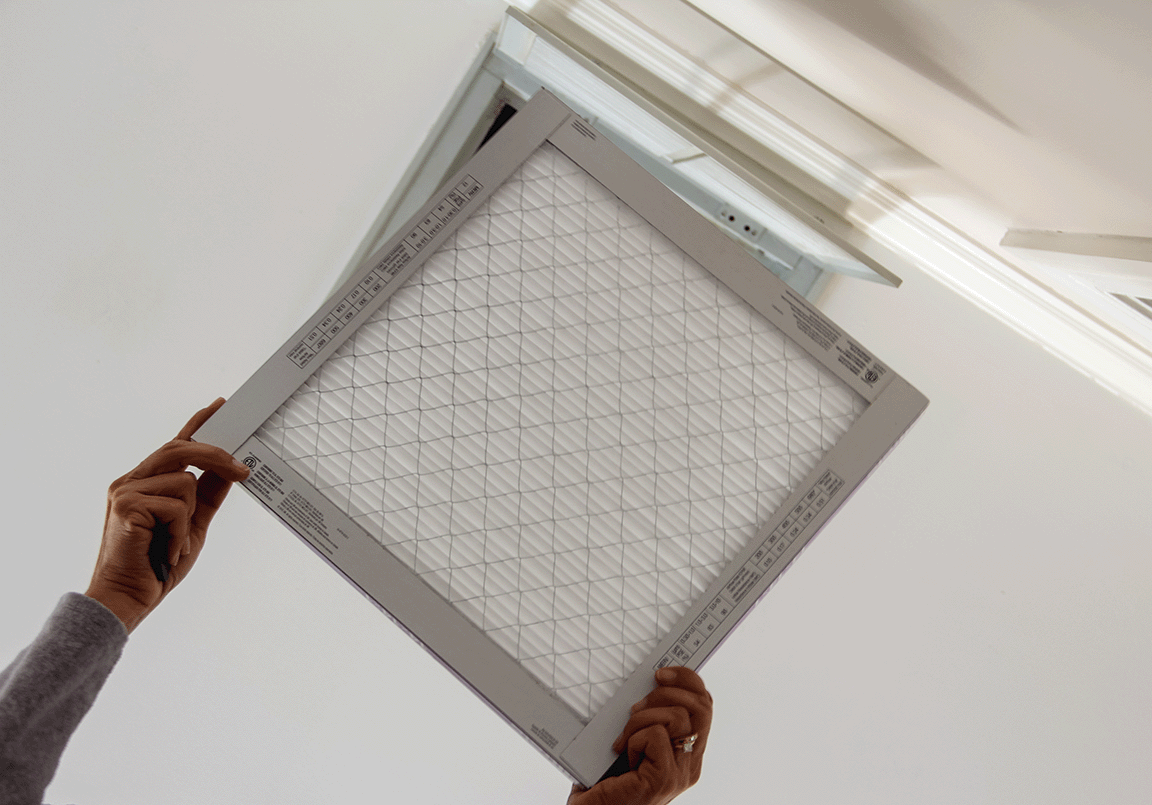
Pull the filter and hold it up to a light source. If light passes through clearly, it's fine. If you're looking at a gray, matted surface that blocks most of the light, it's overdue, regardless of what the calendar says since your last change. This takes about thirty seconds and requires no tools, which makes it one of the easiest home maintenance habits to actually keep up with.
Signs You're Overdue Right Now
- Noticeably weaker airflow from the vents compared to normal
- The system running longer cycles than it used to for the same temperature setting
- A slight increase in dust visible on furniture or surfaces
- Your last electric bill jumped more than the heat alone seems to explain
Any of these, especially during an active heat wave, is worth a filter check today, not next week.
A Simple System for Staying on Top of It
The easiest fix for "I forgot when I last changed it" is picking a fixed, memorable date, the first of the month during summer, for instance, and treating it as a standing reminder rather than something you try to recall from memory. Some homeowners on our Saige's Loyalty Club maintenance plan build this into their regular seasonal service visits instead of tracking it themselves, which takes the guesswork out of it entirely.
When Filter Changes Alone Aren't Enough
If you're staying on top of filter changes and still seeing reduced airflow, warm air, or rising bills, the issue likely isn't the filter anymore. That points toward one of the other common causes of AC underperformance, low refrigerant, dirty condenser coils outside, or a genuinely aging system, which is worth a proper diagnostic rather than continuing to swap filters and hope.
Serving Oklahoma Homes All Summer Long
We service and repair AC systems across Edmond, Oklahoma City, Norman, Guthrie, Piedmont, Bethany, Mustang, and Yukon, and our maintenance plans through Saige's Loyalty Club take the guesswork out of staying ahead of seasonal upkeep.
Frequently Asked Questions
How often should I change my AC filter in summer specifically? Monthly during a heat wave or heavy, near-continuous AC use, compared to the roughly every-90-days guidance that applies during milder, more typical weather.
Does a higher MERV rating always mean a better filter? Not necessarily for every system. Higher MERV filters capture finer particles but can restrict airflow more, which can strain a system that wasn't designed around a high-efficiency filter. It's worth confirming your system's compatibility before upgrading.
Can a dirty filter really cause my AC to blow warm air? Yes. Severely restricted airflow from a clogged filter can cause the evaporator coil to freeze, which then blocks proper cooling until the filter is replaced and the coil has time to thaw.
How do I know if my filter needs changing without waiting for a specific date? Hold it up to a light. If light passes through clearly, it's fine. If it's visibly gray and matted, it's overdue regardless of how much time has passed since your last change.
Does a dirty filter actually raise my electric bill? Yes, meaningfully. A restricted filter forces your system to work harder for the same cooling output, which shows up directly as increased energy use over the course of a billing cycle.
Is it worth paying more for a higher-MERV allergy filter? It can be, particularly for households managing allergies or pet dander, but it's worth confirming with a technician that your specific system can handle the added airflow restriction without straining the blower motor.
What if I've been staying on top of filter changes and still have problems? That points toward a different underlying cause, low refrigerant, dirty condenser coils, or an aging system, rather than the filter itself, and it's worth a proper diagnostic rather than continuing to replace filters and hope the issue resolves.
Does buying the wrong size filter cause problems even if I change it often? Yes. A filter that doesn't fully seal against the frame lets unfiltered air bypass it entirely, which means dust and debris still reach the coil regardless of how frequently you're swapping filters. Always check the exact dimensions printed on the current filter's frame.
Is it worth the extra cost of monthly filters during summer versus quarterly? Yes. The modest added cost of more frequent filter changes is minor compared to the cost of reduced efficiency, higher energy bills, and added strain on the system that comes with running a restricted filter through weeks of continuous heat-wave use.
Related Posts

Repair or Replace Your Fence in Oklahoma?
Should you repair or replace your fence in Oklahoma? Learn the signs, costs, and weather factors to choose the best option for your property.


Why Does Your GFCI Outlet Keep Tripping (and Won't Reset)?
Why does my GFCI outlet keep tripping? Learn the common causes, how to troubleshoot safely, and when to call an electrician.


What Size Generator Does Your Oklahoma Home Actually Need?
Generator size for Oklahoma homes: learn how to calculate loads, avoid overloads, and choose the right backup power for your outage needs.
You’ve Probably Heard About Our REPUTATION
We have maintained quite a reputation for our emergency repair service, affordable prices, open lines of communication and comprehensive services that are sure to go above and beyond your expectations.

Affordable Prices
We believe that everyone deserves access to high-quality solutions, which is why we offer specials that make our services more affordable than ever.

Open Lines of Communication
You can call us anytime to schedule an appointment or simply drop us a message on our website. We are always happy to hear from you!

Emergency Service
We offer evening and weekend availability to help provide prompt, efficient solutions for your service needs.

Comprehensive services
When you work with us, you can trust that you are receiving top-quality services from experienced professionals who take pride in their work.
EPA Certified Technicians
Above + Beyond and NATE only uses factory-trained, EPA certified technicians. Subcontractors are never used.
No Lemon Guarantee
Above + Beyond will replace your entire furnace unit for NO CHARGE if your heat exchanger fails within 10 years of the installation date. (Does not apply if regular maintenance is not completed.)
Punctual to Your Appointment
Your time matters. That's why every Above + Beyond appointment comes with a confirmed arrival window, a courtesy call when your technician is on the way, and a live tracking link so you're never left guessing.
We Stand Behind Our Work
Above + Beyond will provide 1 year labor warranties for parts installations and 2-year labor warranty on all equipment installations.

"We Are Very Happy With Above + Beyond!"
-Lucian D.
- Terri O'Bryant
- Todd Schug
- Winford willie



.avif)

.avif)
We Simplified Home Improvement Financing
- Several different loan types available.
- Financing available for most levels of credit.
- Options for deferred interest, deferred payments.


Serving Our Neighbors in Oklahoma City Since 2015
Ignoring plumbing, HVAC, or electrical issues in your home or business can lead to costly damage and safety hazards. That’s why our local experts are dedicated to keeping your property running smoothly with reliable residential and commercial services in Edmond,
Yukon, and the surrounding areas.
When you choose our certified contractors, you can expect us to deliver long-lasting results while prioritizing your safety from start to finish! From selecting a new appliance to repairing an existing system, we offer a variety of colors and styles from industry-leading brands to accommodate your unique needs and budget.
Our Service Areas
Installing a new AC unit? Frustrated with faulty outlets? Our contractors are available 24/7 for
all your plumbing, electrical, and HVAC needs in Oklahoma City!
.avif)


Take Advantage of
Our Offers + Save Today