


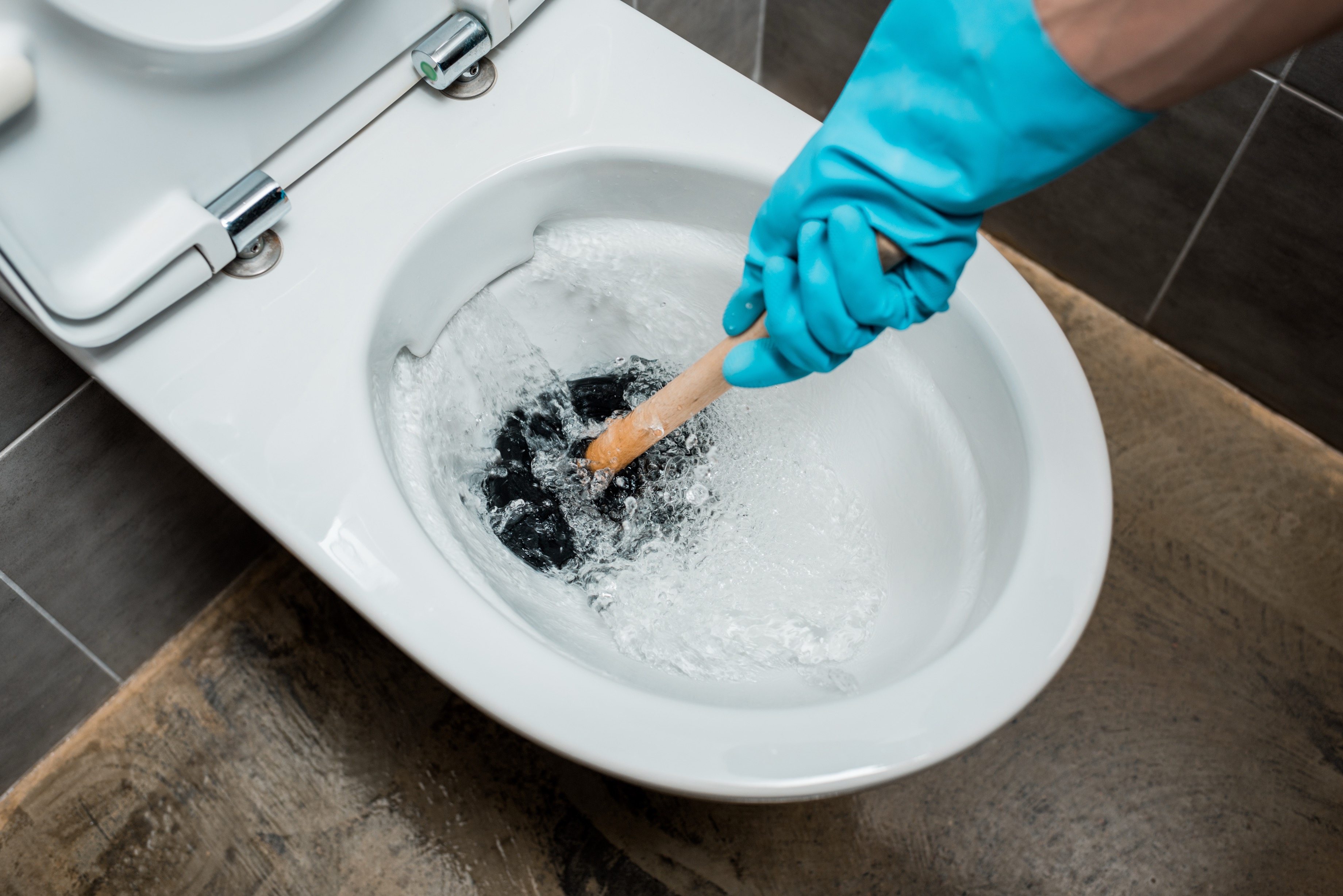


Sewer Line Repair Signs in Oklahoma City
October 28, 2026

Why are my drains gurgling and clogging again?
Gurgling drains usually mean air and wastewater are getting trapped in the main sewer line, so pressure builds and clogs keep coming back. One sink or tub may be the first clue, but the trouble often sits farther down the line, where a small blockage can affect more than one fixture.
At Above + Beyond Service Company, we check whether the problem stays in one branch drain or keeps showing up across the main line. In Oklahoma City, hard water at about 154 PPM and summer heat over 100 degrees can make buildup and debris problems show up faster, so the symptom deserves a closer look before it turns into a bigger repair. If the same drain keeps acting up, sewer line repair may be the right next step.
What gurgling drains and repeat clogs are really telling you
Gurgling after a toilet flush or when another fixture drains means air is being shoved out of the main line, and that pressure shift is a clue, not a quirk. If the sound shows up at the lowest drain after upstairs water runs, the line is struggling to move waste past a restriction. At about 154 PPM in Oklahoma City, hard water can help that restriction build faster.
Repeat clogs in more than one fixture usually mean the problem sits downstream of the individual drain. A sink trap can clog by itself. A toilet, tub, and laundry drain all acting up in the same stretch point to a shared blockage, not three separate bad drains. That's the moment we start thinking about sewer line repair instead of another round of branch-line cleaning.
Slow drainage paired with sewer odors around floor drains, tubs, or toilets means wastewater isn't just moving slowly, it's backing up somewhere in the line. Warm weather above 100 degrees can make those odors show up faster, because trapped waste starts to announce itself. If the smell gets stronger after flushing or running water, the line is losing flow, and the next backup may be closer than it looks.
- Gurgling after flushing tells you air is being displaced in the main line.
- Repeat clogs in multiple fixtures point to a blockage beyond a single branch drain.
- Slow drains plus sewer odor mean wastewater is backing up, not just moving lazily.
- When one fixture clears but another keeps clogging, the shared pipe is the part worth attention.
We'd rather test the line than guess at it. If your drains keep talking back, it's time to look past the fixture and at the pipe that serves the whole house.
Which sewer line problems cause these symptoms
Root intrusion is a common culprit. Roots slip into a joint or crack, then spread inside the pipe and catch paper, grease, and solids. That narrows the passage little by little, so the line clogs again after a temporary clear-out. When that keeps happening, we start thinking about repair sewer line work instead of another quick cleanout.
Offset, cracked, or bellied pipe sections can create the same mess in a different way. An offset joint leaves a lip that snags waste. A crack lets soil shift the pipe out of line. A belly holds standing water and waste together, so the same fixture backs up again and again because the low spot never fully drains.
Grease, scale, and collapsed sections can all look like a simple clog at first. Grease coats the pipe wall and traps more debris on top of it. Scale from hard water, which runs around 154 PPM here, builds a rough surface that grabs waste faster. A collapsed section cuts the flow path down hard, so the problem keeps worsening until the line is repaired or replaced. At 100+ summer heat, trapped waste can also sour faster, which makes the line smell worse while it struggles.
- Roots cause recurring clogs after a temporary clear-out.
- Offsets, cracks, and bellies create repeat backups in the same fixtures.
- Grease, scale, and collapse can mimic one clog while the line keeps failing.
- A later camera check can show which of those is actually inside the pipe.
We see the pattern, then we trace the cause. That keeps you from chasing the same backup twice.
When a sewer issue becomes an urgent plumbing problem
Raw sewage rising through a tub, shower, or floor drain means you should stop using fixtures and call for immediate service. That's the clearest sign the main line has failed enough that wastewater isn't leaving the house safely. The same goes if more than one fixture backs up at once, because the line is no longer carrying flow the way it should.
A sewer odor that gets stronger after you flush or run water means the line is losing flow and may be close to a full blockage. We pay attention when that smell shows up after use, not just in a still room. Hard water around 154 PPM in Oklahoma City can help buildup tighten the passage, and summer heat above 100 degrees can make the problem show itself faster.
If the backup is only in one sink or one tub, the issue may still be local. If it spreads across the lowest drains in the house, the main sewer line is the part that needs attention. That's when waiting turns a slow problem into a mess you can't ignore.
What you can check safely before a technician arrives
You can narrow this down without opening a line or pouring anything harsh into a drain. Start with the pattern. If one sink or tub is slow but the rest of the house drains normally, that points to a local branch problem. If several fixtures act up together, the trouble is farther downstream.
Listen at the lowest drains after you flush an upstairs toilet or run the washing machine. A gurgle there means air is getting pushed around in the shared drain path, and that helps us separate a simple clog from a main-line problem. It also gives us a cleaner starting point for sewer line repair near me searches, if that's the route you end up taking.
Skip the quick-fix habits that can muddy the water. Drain chemicals can soften a surface clog without touching the real restriction, which delays the repair. Repeated plunging of every fixture can force wastewater back and forth through old joints, and a sewer snake pushed past accessible branch lines can scratch or crack brittle pipe.
- Check whether the symptom stays in one fixture or shows up in several.
- Listen for gurgling at floor drains, tubs, or lower-level fixtures after upstairs water use.
- Leave harsh chemicals alone and don't keep plunging every drain in the house.
- Stop at accessible branch lines, because anything deeper belongs in our hands.
That kind of note-taking saves time once we get there. It also helps us decide whether the next step is a focused cleaning, a closer inspection, or a larger repair.
How plumbers diagnose a failing sewer line
A sewer camera inspection shows us what the pipe is doing inside, where a clog alone can't tell the full story. We send the camera through the main line and look for cracks, root intrusion, offsets at the joints, bellies that hold waste, and collapsed sections that block flow. That gives us the damage pattern, not just the symptom.
We also test flow from more than one fixture, then watch how the line responds. If water moves well from one drain but backs up when another fixture runs, the problem is farther down the shared line. That check helps us separate a main-line failure from a branch issue without guessing.
The inspection tells us which fix makes sense. A short crack or root entry can often be handled with spot repair if the rest of the pipe still looks sound. If the camera shows a long damaged run, a severe belly, or a section that has already failed again, we start talking about trenchless sewer line repair or full replacement instead.
- Camera inspection, to map the damage inside the pipe.
- Flow testing from multiple fixtures, to confirm the trouble is in the main line.
- Joint, slope, and wall checks, to see whether the line still has enough structure for a repair.
- Repair-versus-replace judgment, based on what the pipe actually looks like.
That’s the part that saves you from paying for the wrong fix. We'd rather find the weak spot once than clean the same line twice.
Repair or replace the sewer line: how to choose
Localized cracking, joint failure, or root intrusion can often be repaired while the rest of the line still maintains its shape. That's the kind of damage where a liner patch or spot fix can restore flow without opening up the whole yard.
Replacement starts making more sense when the pipe has collapsed, the belly is severe, or the same section keeps backing up after earlier work. A broken run like that doesn't just leak, it traps waste and water again and again, so the symptom comes right back.
Age and material matter too. Cast iron that has spent 40 to 50 years in wet soil, or clay pipe with repeated root intrusion, is less likely to give you a long-lasting repair than newer PVC with one bad joint. If the damaged length is short, repair may hold. If the trouble stretches across several feet, the odds tilt the other way.
| What we see | Repair usually makes sense | Replace sewer line usually makes sense |
|---|---|---|
| One crack, one joint, or one root entry | The rest of the pipe is sound and the damage is short | |
| Collapsed pipe, severe belly, or repeated backups in the same spot | The structure has failed or keeps failing | |
| Older pipe with widespread wear | The line has too many weak points to trust | |
| Newer pipe with a limited defect | Yes, if the camera shows solid walls around it |
Oklahoma City's hard water, around 154 PPM dissolved minerals, can add scale to an already tired line, and 100+ degree summers can make weak sections show their age faster. That doesn't decide the fix by itself, but it does make a borderline pipe less worth gambling on. We look at the whole picture before we call it one way or the other.
How sewer line repair is done and what happens next
We usually start with the least invasive fix that the pipe can support. If the line still has enough structure, trenchless sewer line repair can restore flow with a liner that seals cracks from the inside, or with pipe bursting that breaks the old pipe while a new one is pulled into place. That keeps the yard quieter and the repair tighter.
Traditional excavation comes out when the pipe is too damaged for either trenchless option. We dig down to the failed section, remove the broken pipe, and rebuild that run so the line can carry waste without catching it again. It’s the right move when the pipe has lost too much shape to hold a liner.
After the repair, we recheck the line for grade, flow, and leftover root intrusion. Grade matters because a low spot can hold water and waste, which slows the line and starts the same clog cycle again. We also run water through from more than one fixture so we can see how the whole run moves, not just the spot we opened.
The last step is a camera pass to make sure the repair sits cleanly and the line stays open. If roots are still sneaking in at another joint, we want to catch that now, before the next backup. We’d rather fix the weak point once than let it turn into a repeat visit.
Frequently asked questions
How long can a sewer line keep working after the first gurgling sound appears?
A sewer line can keep moving wastewater for days, weeks, or much longer after the first gurgle, but the timeline is unpredictable. The sound means flow is changing inside the pipe, and a partial restriction can stay stubbornly quiet until grease, roots, or loose debris catch enough waste to trigger a backup. Older clay or cast iron lines usually give less warning.
Can repeated clogs be fixed with drain cleaning alone?
Drain cleaning can clear loose buildup, but repeated clogs usually come back if the pipe has a crack, offset joint, or belly that keeps trapping waste. A cleaning tool only removes what it reaches. If the line keeps snagging debris in the same place, the fix has to address the damaged section, not just the blockage.
What should I do if sewage starts backing up into the house at night?
Stop using water fixtures right away and keep people away from the backed-up area. Raw sewage can carry bacteria, and a floor drain or tub overflow can spread it fast, even after hours. If you can safely shut off water to the affected fixtures, do that, then arrange service as soon as possible so the backup doesn't keep feeding into the home.
What to do before the problem gets worse
Should the line still show only one fixture acting up, you can keep watching it. If the problem has spread or keeps returning, it's time to confirm whether the main line is failing before the next backup.
A camera inspection and flow test can show where the line is failing and whether repair or replacement makes sense.
Book a sewer camera inspection and flow test with Above + Beyond Service Company, and we'll check the line before you decide on the next fix.
Call (405) 428-3382 or visit pinkvantechs.com to schedule service in Oklahoma City and nearby Central Oklahoma communities.
Written by the Above + Beyond Service Company team. All technicians licensed through the Oklahoma Construction Industries Board (CIB) Above + Beyond Service Company is licensed for HVAC, plumbing, and electrical work in Oklahoma under license numbers #00176537, #00136197, and #160383 · NATE-certified technicians.
Related Posts
Generator Maintenance Checklist for Oklahoma Ice Storms
Generator maintenance in Oklahoma City: learn what to check before an ice storm, when a no-start is simple, and when to call for service fast.


Water Heater Repair in OKC: Repair, Replace, or Tankless?
Water heater repair in Oklahoma City: learn when to fix, replace, or switch to tankless, plus what to check first and how to save money.


Furnace Not Turning On in Oklahoma City? Six Things to Check
Furnace not turning on? Check these six things, learn what the symptoms mean, and know when to call for furnace repair in Oklahoma City.

You’ve Probably Heard About Our REPUTATION
We have maintained quite a reputation for our emergency repair service, affordable prices, open lines of communication and comprehensive services that are sure to go above and beyond your expectations.

Affordable Prices
We believe that everyone deserves access to high-quality solutions, which is why we offer specials that make our services more affordable than ever.

Open Lines of Communication
You can call us anytime to schedule an appointment or simply drop us a message on our website. We are always happy to hear from you!

Emergency Service
We offer evening and weekend availability to help provide prompt, efficient solutions for your service needs.

Comprehensive services
When you work with us, you can trust that you are receiving top-quality services from experienced professionals who take pride in their work.
EPA Certified Technicians
Above + Beyond and NATE only uses factory-trained, EPA certified technicians. Subcontractors are never used.
No Lemon Guarantee
Above + Beyond will replace your entire furnace unit for NO CHARGE if your heat exchanger fails within 10 years of the installation date. (Does not apply if regular maintenance is not completed.)
Punctual to Your Appointment
Your time matters. That's why every Above + Beyond appointment comes with a confirmed arrival window, a courtesy call when your technician is on the way, and a live tracking link so you're never left guessing.
We Stand Behind Our Work
Above + Beyond will provide 1 year labor warranties for parts installations and 2-year labor warranty on all equipment installations.

"We Are Very Happy With Above + Beyond!"
-Lucian D.
- Terri O'Bryant
- Todd Schug
- Winford willie




We Simplified Home Improvement Financing
- Several different loan types available.
- Financing available for most levels of credit.
- Options for deferred interest, deferred payments.


Serving Our Neighbors in Oklahoma City Since 2015
Ignoring plumbing, HVAC, or electrical issues in your home or business can lead to costly damage and safety hazards. That’s why our local experts are dedicated to keeping your property running smoothly with reliable residential and commercial services in Edmond,
Yukon, and the surrounding areas.
When you choose our certified contractors, you can expect us to deliver long-lasting results while prioritizing your safety from start to finish! From selecting a new appliance to repairing an existing system, we offer a variety of colors and styles from industry-leading brands to accommodate your unique needs and budget.
Our Service Areas
Installing a new AC unit? Frustrated with faulty outlets? Our contractors are available 24/7 for
all your plumbing, electrical, and HVAC needs in Oklahoma City!


Take Advantage of
Our Offers + Save Today


