


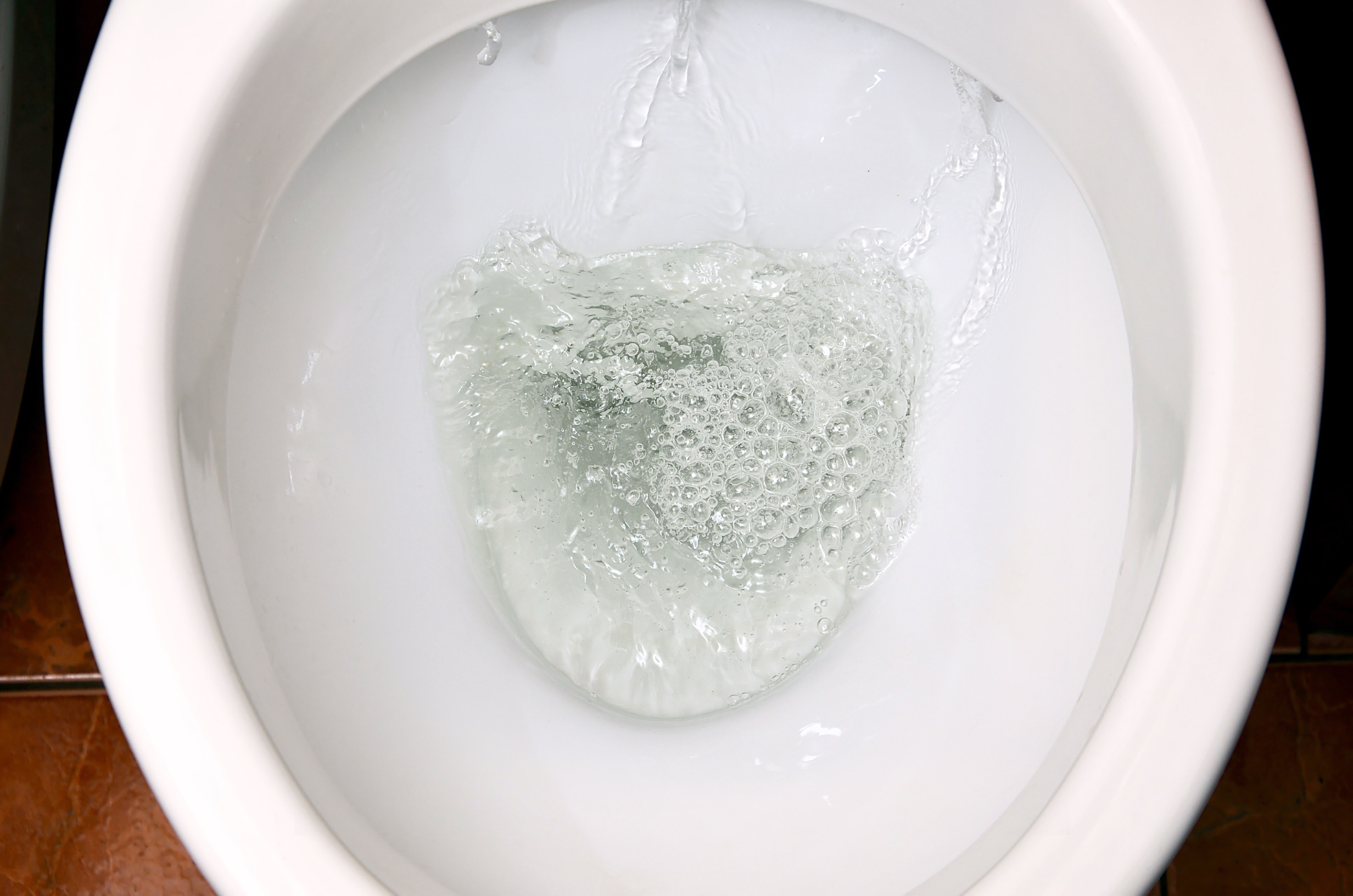


Toilet Overflowing? How to Stop the Water and Prevent Damage
November 6, 2026

What should you do first when a toilet is overflowing?
Stop the water first. A toilet overflowing keeps getting worse while the tank keeps feeding the bowl, so your job is to cut that supply before you worry about the clog.
At Above + Beyond Service Company, we start by checking the tank parts that control the refill. Lift the lid, press the rubber flapper down by hand, then turn the supply valve behind the toilet clockwise until it stops. If the valve won't move, shut off the main water instead.
Once the water stops rising, get towels down and move to cleanup. If the bowl is still climbing, the source hasn't been shut off yet.
Why toilets overflow in the first place
Most toilet overflows start with a clog in the bowl or trap. That bend holds water by design, and when paper, wipes, or an object narrows it too much, the flush can’t move fast enough, so the bowl fills and spills. In a home with hard water around 154 PPM dissolved minerals, buildup can make that passage tighter over time.
A blockage farther down the drain line works differently. The toilet bowl may still fill and the plunger may move water around, but the waste has nowhere to go past the restriction, so the bowl keeps backing up. If the line is affected beyond the toilet itself, the problem sits deeper than the porcelain.
The tank can cause its own kind of overflow, too. A fill valve that doesn’t shut off, or a float that sticks, keeps sending water into the tank until it reaches the overflow tube and feeds the bowl again. That’s why a toilet can keep rising even when nobody has flushed it.
| Cause | What it does | What you’ll notice |
|---|---|---|
| Bowl or trap clog | Blocks the first bend, so water can’t leave fast enough | Sudden rise in the bowl after a flush |
| Drain line blockage | Restricts flow farther out, so the toilet can’t empty normally | Plunging helps less than you’d expect |
| Fill valve or float problem | Keeps the tank refilling, which keeps feeding the bowl | Water keeps moving even without a flush |
A quick way to think about it is this: if the water rises right after a flush, the clog is usually local. If the tank keeps running on its own, the tank parts are part of the story. The heat of an Oklahoma summer, with 100+ degree days, doesn’t cause the overflow, but it does make fast cleanup more important when water starts spreading across the floor.
How to tell whether the problem is in the toilet or the drain line
Slow drainage in other fixtures points away from a simple toilet clog. If the tub, shower, or nearby sink also empties lazily, the restriction is affecting more than the bowl. That means the waste is meeting resistance farther along the path, not just at the toilet trap.
Gurgling is another useful clue. Air gets shoved through a partly blocked line, which changes how the water moves and can make a shower or tub burp when you flush. If water shows up in one of those fixtures instead, the drain path is sharing the load and the problem is beyond the toilet itself.
A toilet that keeps refilling without a flush points somewhere else entirely. The tank's fill valve opens to top off the tank, and the float tells it when to stop. If that pair keeps cycling on its own, the bowl can keep rising even though the drain isn't the part misbehaving. In that case, the tank parts deserve the closer look.
How to clear the clog after the water is under control
A flange plunger is the first tool we reach for after the bowl level settles. It has the extra rubber fold that fits a toilet drain, and that shape helps it seal around the opening instead of slipping on the porcelain. Seat it firmly, add slow pressure, then pull back with a steady motion. That pull helps move the blockage back through the trap instead of packing it tighter.
If the plunger doesn't clear it after a few solid tries, a toilet auger is the next step. The curved end is made to follow the porcelain path without scratching it, and the cable reaches into the trap where a simple plunger can't reach. Turn the handle gently and let the auger bite into the clog. Don't force it. If you hit hard resistance right away, stop and reset so you don't jam the cable.
Skip chemical drain cleaners in a toilet. They can sit in the bowl, attack the seals, and damage the porcelain before they ever reach the blockage. They also make the cleanup worse if the clog holds, because you're left with a harsh liquid in a fixture you still need to work on. We see the same pattern with many toilet overflow calls, and the fix usually comes down to the right tool, not a stronger chemical.
Around Oklahoma City, hard water can leave mineral buildup in the bowl and trap over time, and that can make a partial clog harder to move. With summer temperatures often over 100 degrees, a bathroom floor also dries faster if you keep air moving once the clog is gone. If the toilet keeps refusing to clear after the auger, the blockage is likely deeper in the drain path. That's when the problem stops being a simple bowl clog.
How to clean up toilet overflow water without making the damage worse
Toilet overflow water should be treated as dirty water, even when it looks clear. Gloves and closed-toe shoes come first, because you don't want that water on your skin or tracked through the house.
Use towels, a mop, or a wet-dry vacuum to pull up standing water. A wet-dry vac is the fastest tool for a shallow spill, while towels help at the toilet base and in tight corners where a nozzle won't reach. Empty the tank and bowl water only after the floor is under control, so you don't spread the mess.
Wash hard surfaces with a household disinfectant and follow the label directions. Tile, vinyl, and sealed flooring can usually be cleaned that way. Soft items need a different call, because rugs, bath mats, and towels that soaked up a lot of water can hold onto moisture and odor even after they look dry.
Open windows and run fans right away. In Oklahoma City, summer heat can push past 100 degrees, and that warm air helps moisture move out of the room faster. We've also got water around 154 PPM dissolved minerals, so dried residue can show up on fixtures and flooring if you let the water sit too long. Dry the room fully before moisture reaches the subfloor or walls.
When an overflowing toilet means a bigger plumbing problem
A toilet keeps overflowing when the drain path isn't clearing fast enough, or when something beyond the bowl is slowing the water down. If it overflows again within a few days, that's usually a partial blockage or a failing drain path, not a one-time hiccup.
Backups in other fixtures push the problem past the toilet itself. A tub, shower, or floor drain that starts to rise when you flush means the line is backing up somewhere else, and the toilet is just the easiest place for it to show.
A sewer smell that doesn't fade, or several slow drains at once, points to a line issue that needs inspection. In older Oklahoma City homes, shifting clay soil can move buried lines over time, and repeated movement can make the same drain act up again and again. We also see more mineral residue in homes with about 154 PPM hard water, and that buildup can narrow flow over time.
If you want a quick decision rule, use this one:
- Overflow again within days, suspect a partial blockage.
- Water backs up in another fixture, suspect the main line.
- Sewer odor or multiple slow drains, suspect a vent or sewer issue.
- The toilet runs fine once, then fails again, the problem isn't isolated.
That's the point where the question stops being how to fix an overflowing toilet and becomes where the blockage is hiding. If the same pattern keeps returning, the drain path or sewer line needs a closer look than a plunger can give it.
How to reduce the chance of another toilet overflow
Keep only toilet paper and human waste in the bowl. Wipes, paper towels, and other extras break down slowly, which makes the flush move too much material at once and raises the chance of a backup. A small habit here goes a long way.
We also tell people to check the tank parts before trouble starts. A flapper that seals cleanly closes the tank between flushes, and a supply valve that turns freely lets you shut water off fast if the bowl starts rising again. In homes with about 154 PPM dissolved minerals, rubber parts can crust up sooner, so that check matters more than it sounds.
A flange plunger should live near the toilet, not in a garage corner. The right cup seals the drain opening and gives you a quick shot at moving a small clog before it turns into a toilet overflow. If you’re not sure the valve still works, twist it open and closed once every so often. That little test can save a lot of scrambling later.
The same logic helps in summer, when indoor rooms can sit near 100+ degrees and dry out faster after cleanup. Dry parts stay easier to inspect, and a flapper that’s warped or sticky shows up sooner. If the toilet keeps acting strange after that, the problem may be deeper in the drain path, and the next step is a closer look at the tank, the line, and any hidden moisture.
Frequently Asked Questions
What if my toilet overflows on its own without anyone flushing it?
A toilet that rises without a flush usually points to the tank or the drain path. If the bowl keeps filling after you shut the supply valve, the water is coming back from the drain side, and you should stop using other fixtures until the source is checked. If the rise stops when the valve is closed, the tank parts are the place to inspect next.
When should I shut off the whole house water instead of the toilet valve?
Whole-house shutoff makes sense when the toilet valve won't close, you can't reach it, or water is spreading past the bathroom. The main shutoff cuts every fixture at once, which protects the house when the toilet valve isn't dependable. It's the safer move if water is reaching floors or ceilings outside the bathroom.
How do I know if the overflow is coming from the tank instead of the drain?
A tank-side problem shows up when the bowl keeps refilling after the flush has ended, and the water is entering from above instead of pushing up from below. A fill valve that sticks open keeps feeding the tank, which then sends more water into the bowl through the flush path. That points to the tank parts, not a simple bowl clog.
What should I do if the toilet keeps overflowing after I plunge it?
Repeated overflow after plunging means the blockage is deeper than the bowl or the trap. Stop adding water, because another flush can force more water over the rim before the line clears. If other fixtures start acting up too, the drain path is involved and the problem needs a closer look.
How long should I wait before I call a plumber for toilet overflow damage?
Don't wait if the water has reached flooring, baseboards, or anything electrical. Moisture can move under the surface fast, and a wet subfloor can hide damage long after the bowl looks calm. If the toilet keeps acting up after the first fix, we check the tank parts, the drain path, and any hidden moisture to see what failed.
Conclusion
If the water has stopped at the source, you can move on to cleanup. If it hasn’t, or the clog keeps coming back, the toilet still needs a closer look before the damage spreads.
All technicians are licensed through the Oklahoma Construction Industries Board (CIB). That means the work is handled by qualified pros when the cause isn’t obvious.
If you need that next check, Above + Beyond Service Company can inspect the tank parts, drain path, and hidden moisture, then handle drain clearing or sewer line problems if that’s what the overflow points to. Call (405) 428-3382 or book online at pinkvantechs.com for service across Oklahoma City and nearby Central Oklahoma communities.
Written by the Above + Beyond Service Company team. All technicians licensed through the Oklahoma Construction Industries Board (CIB) Above + Beyond Service Company is licensed for HVAC, plumbing, and electrical work in Oklahoma under license numbers #00176537, #00136197, and #160383 · NATE-certified technicians.
Related Posts
Why Is Your Furnace Blowing Cold Air in Oklahoma City?
Why is your furnace blowing cold air? Learn the normal startup delay, common causes, safe checks, and when Oklahoma City repairs are needed.


Furnace Repair Near Me in Edmond: What to Expect
Furnace repair near me in Edmond? Learn what happens during the call, diagnosis, repair, FAQs, and next steps from Above + Beyond.
Electrical Panel Upgrade in Oklahoma City: When?
Electrical panel upgrade in Oklahoma City: learn why breakers keep tripping, when one circuit is the issue, and when it's time to call for service.

You’ve Probably Heard About Our REPUTATION
We have maintained quite a reputation for our emergency repair service, affordable prices, open lines of communication and comprehensive services that are sure to go above and beyond your expectations.

Affordable Prices
We believe that everyone deserves access to high-quality solutions, which is why we offer specials that make our services more affordable than ever.

Open Lines of Communication
You can call us anytime to schedule an appointment or simply drop us a message on our website. We are always happy to hear from you!

Emergency Service
We offer evening and weekend availability to help provide prompt, efficient solutions for your service needs.

Comprehensive services
When you work with us, you can trust that you are receiving top-quality services from experienced professionals who take pride in their work.
EPA Certified Technicians
Above + Beyond only uses factory-trained, NATE and EPA-certified technicians. Subcontractors are never used.
10-Year Heat Exchanger Guarantee
Above + Beyond will replace your entire furnace unit for NO CHARGE if your heat exchanger fails within 10 years of the installation date. (Does not apply if regular maintenance is not completed.)
Punctual to Your Appointment
Your time matters. That's why every Above + Beyond appointment comes with a confirmed arrival window, a courtesy call when your technician is on the way, and a live tracking link so you're never left guessing.
We Stand Behind Our Work
Above + Beyond will provide 1 year labor warranties for parts installations and 2-year labor warranty on all equipment installations.

"We Are Very Happy With Above + Beyond!"
-Lucian D.
- Terri O'Bryant
- Todd Schug
- Winford willie


We Simplified Home Improvement Financing
- Several different loan types available.
- Financing available for most levels of credit.
- Options for deferred interest, deferred payments.


Serving Our Neighbors in Oklahoma City Since 2015
Ignoring plumbing, HVAC, or electrical issues in your home or business can lead to costly damage and safety hazards. That’s why our local experts are dedicated to keeping your property running smoothly with reliable residential and commercial services in Edmond,
Yukon, and the surrounding areas.
When you choose our certified contractors, you can expect us to deliver long-lasting results while prioritizing your safety from start to finish! From selecting a new appliance to repairing an existing system, we offer a variety of colors and styles from industry-leading brands to accommodate your unique needs and budget.
Our Service Areas
Installing a new AC unit? Frustrated with faulty outlets? Our contractors are available 24/7 for
all your plumbing, electrical, and HVAC needs in Oklahoma City!


Take Advantage of
Our Offers + Save Today


